
Tail Rot Disease in Fish: Symptoms, Causes & Treatment
Tail rot is a fast-moving bacterial infection of a fish's caudal fin. Learn the early signs, causes, and a step-by-step plan to treat and prevent it.

✓Aanbevolen Uitrusting
This article contains affiliate links. We may earn a small commission at no extra cost to you. Learn more
You spot it during a routine water change: the once-flowing tail on your favorite fish now looks frayed, almost chewed at the edges. A day later, it's worse. Tail rot moves fast, and every hour you wait to act gives bacteria more tissue to destroy.
Quick Answer: Tail rot is a bacterial (sometimes fungal) infection that eats away at fin and tail tissue, usually triggered by poor water quality, stress, or injury. Catch it early — ragged edges, a whitish rim, or discoloration — and most fish recover fully within 2-4 weeks with a water change, a quarantine tank, and an antibacterial treatment like API Furan-2. Left untreated, it can reach the fish's body and become fatal.
What Is Tail Rot Disease?
Tail rot is a progressive infection that destroys the soft tissue of a fish's caudal fin, working inward from the outer edge. It's caused by opportunistic bacteria — most commonly Aeromonas and Pseudomonas species — that take hold when a fish's immune system is already compromised [1].
Healthy fish carry these bacteria in low numbers without any problem. It's stress, dirty water, or an open wound that lets the infection get a foothold.
Think of it like a paper cut that gets infected because you never cleaned it. The tail's thin, blood-vessel-rich tissue makes it especially vulnerable — it's often the first place disease shows up.
Pro Tip: Check your fish's tail every time you feed them. Catching tail rot in its first 48 hours cuts treatment time roughly in half.
Related conditions include fin rot, which affects the pectoral, dorsal, and anal fins the same way. If you keep angelfish, the Angelfish Diseases and Health guide covers a broader range of conditions worth knowing.
What Causes Tail Rot in Freshwater Fish
Poor water quality is the leading cause of tail rot in home aquariums. Ammonia and nitrite spikes damage the protective slime coat that normally keeps bacteria out.
Once that barrier breaks down, infection sets in fast. Here's the typical chain of events:
- Overstocked or under-filtered tank → ammonia builds up → slime coat breaks down → bacteria invade fin tissue
- Fin nipping from aggressive tankmates → open wound → bacterial entry point → localized infection spreads
- Sudden temperature swings → stress hormones rise → immune response weakens → opportunistic bacteria multiply
- Overcrowded quarantine or shipping stress → chronic cortisol elevation → fin tissue breaks down from the tip inward
Research on ornamental fish health backs this up: stress-related immune suppression is consistently linked to secondary bacterial infections in captive fish populations [2]. As of 2026, most aquarium veterinarians agree that water quality management prevents more tail rot cases than any medication does.
Pro Tip: Test ammonia, nitrite, and nitrate weekly, not just when a fish looks sick. By the time symptoms show, water quality has usually been off for days.
How to Spot Tail Rot Early: Signs and Symptoms
The earliest sign of tail rot is a ragged, frayed edge on the tail fin, often with a thin white or grayish rim. This white line is dying tissue, and it marks where the infection is actively spreading.
Watch for these signs, roughly in order of severity:
- Frayed or uneven tail edges — the fin looks "eaten" rather than smoothly torn
- A white or milky rim along the damaged edge — this is the active infection line
- Redness or bloody streaking in the fin rays — a sign the infection has reached blood vessels
- Shrinking fin size over several days — tissue loss is progressing toward the body
- Clamped fins and lethargy — the fish is stressed and possibly in pain
- Fungal white fuzz on top of the bacterial damage — a common secondary infection [3]
Compare this to a healthy tail: smooth, evenly colored, and fully extended when swimming. Species like bettas and goldfish, prized for long flowing fins, show damage especially clearly.
Pro Tip: Photograph the tail every 2-3 days during treatment. Side-by-side photos make it much easier to tell if the rot is actually healing or just looking different under the light.
Tail Rot vs Fin Rot: What's the Difference
Tail rot and fin rot are the same disease process, just named for which fin is affected. "Fin rot" is the umbrella term; "tail rot" specifically refers to damage on the caudal (tail) fin.
The distinction matters because tail rot often spreads faster — the tail is closer to the body's vital organs.
| Feature | Tail Rot | Fin Rot (dorsal/pectoral/anal) |
|---|---|---|
| Location | Caudal (tail) fin only | Any other fin |
| Spread speed | Faster — closer to body | Usually slower |
| Common trigger | Fin nipping, poor water quality | Poor water quality, overcrowding |
| Risk if untreated | Can reach body within 1-2 weeks | Can take 3-4 weeks to reach body |
| Treatment | Same antibacterial protocol | Same antibacterial protocol |
Bottom line: treat both the same way, but treat tail rot with more urgency because of its proximity to the body. According to the Merck Veterinary Manual's aquarium fish section, delayed treatment of caudal fin infections carries a higher risk of systemic spread than infections on other fins.
Step-by-Step Treatment Plan for Tail Rot
The most effective treatment combines a water change, isolation, and a targeted antibacterial medication — started within 48 hours of noticing symptoms. Waiting longer significantly lowers recovery odds.
Here's the protocol most experienced keepers follow:
- Test and correct water parameters immediately. Ammonia and nitrite should read 0 ppm; nitrate should stay under 20 ppm.
- Move the affected fish to a quarantine tank if tankmates are nipping fins or if you're using medication that could harm invertebrates or plants.
- Perform a 25-50% water change to dilute bacterial load before medicating.
- Start an antibacterial treatment like API Furan-2, which targets gram-negative bacteria including Aeromonas — the most common tail rot culprit.
- Add aquarium salt (for non-scaleless, salt-tolerant species) at 1-3 tablespoons per 5 gallons to support the slime coat during healing.
- Repeat water testing every 2-3 days and continue the medication course fully, even if the tail looks better early.
Pro Tip: Never stop antibacterial treatment early just because symptoms improve. Cutting the course short is one of the top reasons tail rot comes back within a month.
We recommend the full guide on cycled tank setup if you're unsure whether your filter is properly established — an uncycled tank is one of the most common root causes behind repeat infections.
Best Products for Treating Tail Rot
A dedicated quarantine tank, a reliable antibacterial medication, and a fast test kit are the three non-negotiables for treating tail rot. Skipping any one of them slows recovery.
(Estimates only — actual prices on Amazon may vary.) A basic treatment setup runs $40-90 depending on tank size and medication choice.
- API Furan-2 — broad-spectrum antibacterial that specifically targets the gram-negative bacteria behind most tail rot cases.
- Seachem Kanaplex — a strong secondary option for stubborn infections that don't respond to the first round of treatment.
- API Freshwater Master Test Kit — checks ammonia, nitrite, nitrate, and pH, so you can confirm water quality is actually the trigger.
- Fluval Spec Quarantine Tank Kit — a small, easy-to-clean setup for isolating sick fish without disrupting the main tank's cycle.
- API Aquarium Salt — supports slime coat recovery for salt-tolerant species during and after treatment.
Check out our guide to molly fish health and disease prevention for species-specific medication tolerances before dosing a community tank.
Water Parameters and Tank Conditions That Cause Tail Rot
Stable, clean water is the single biggest factor in preventing tail rot from ever starting. Most cases trace back to a slow decline in water quality that went unnoticed for days or weeks.
Target these ranges for most community freshwater species:
| Parameter | Safe Range | Danger Zone |
|---|---|---|
| Ammonia | 0 ppm | Any detectable reading |
| Nitrite | 0 ppm | Any detectable reading |
| Nitrate | Under 20 ppm | Over 40 ppm |
| Temperature | 72-78°F (species-dependent) | Swings over 4°F in a day |
| pH | 6.5-7.5 (species-dependent) | Sudden shifts of 0.3+ in a day |
Species vary in their exact needs — a betta and a red tail shark don't want the same setup. The Red Tail Shark care guide breaks down parameters for fin-sensitive fish that are especially prone to tail damage from aggression.
Pro Tip: A slow, gradual decline in nitrate is often the hidden trigger. Test it monthly even in tanks that "look fine."
Preventing Tail Rot: Long-Term Prevention Strategies
Weekly water changes of 10-25% and a properly cycled filter prevent the vast majority of tail rot cases before they start. Prevention costs far less time and money than treatment.
Build these habits into your routine:
- Vacuum substrate weekly to remove decaying food and waste before it raises ammonia.
- Avoid overstocking — use a stocking calculator like AqAdvisor to confirm your bioload matches your filtration.
- Separate known fin nippers such as tiger barbs or certain tetras from long-finned species like bettas and fancy goldfish.
- Quarantine new fish for 2-4 weeks before adding them to an established tank.
- Keep decor smooth-edged — sharp rocks and plastic plants are a common source of fin injuries that lead to infection.
Since June 2026, several fishkeeping communities have reported that adding live plants like Java fern noticeably reduces fin-nipping incidents, likely by giving aggressive fish something else to interact with. For a low-maintenance species less prone to fin damage in the first place, the Fantail Goldfish office tank guide is worth a look.
When to See a Vet or Aquatic Specialist
If tail rot reaches the fish's body or doesn't improve after 5-7 days of treatment, it's time to consult an aquatic veterinarian. Home treatment handles most cases, but advanced infections need professional diagnosis.
Warning signs that go beyond home care:
- Redness or swelling spreading past the fin base onto the body
- The fish stops eating for more than 2 days
- Rapid, labored breathing at the surface
- No improvement after a full antibacterial treatment course
A veterinarian can run a bacterial culture to identify the exact species involved, which matters because some strains resist common over-the-counter medications [4]. The FishBase species database is also a useful reference for confirming whether your species has known sensitivities to specific medications before you self-treat.
Ready to upgrade your setup? Browse our complete collection of quarantine and treatment gear before the next outbreak catches you unprepared.
Aanbevolen Uitrusting
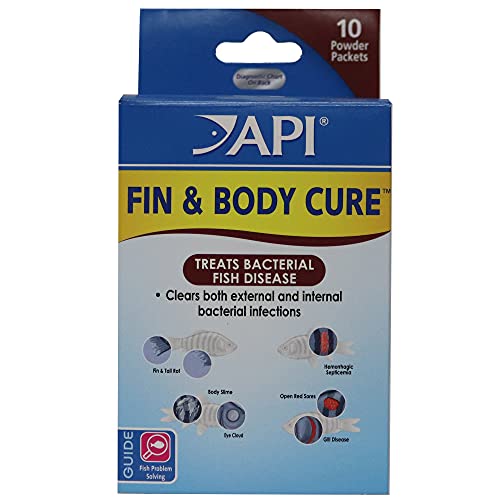
API Furan-2
Targets the gram-negative bacteria responsible for most tail rot cases
Check Price on AmazonSeachem Kanaplex
Stronger backup antibacterial for infections that resist first-line treatment
Check Price on AmazonAPI Freshwater Master Test Kit
Confirms ammonia, nitrite, and nitrate levels that trigger tail rot
Check Price on Amazon
Fluval Spec Quarantine Tank Kit
Compact tank for isolating sick fish without disturbing the main tank's cycle
Check Price on AmazonAPI Aquarium Salt
Supports slime coat regeneration in salt-tolerant species during healing
Check Price on AmazonVeelgestelde Vragen
Referenties en Bronnen
- https://pubmed.ncbi.nlm.nih.gov/20853167/
- https://pmc.ncbi.nlm.nih.gov/articles/PMC7182253/
- https://pubmed.ncbi.nlm.nih.gov/1142560/
- https://pmc.ncbi.nlm.nih.gov/articles/PMC3358087/
- https://pubmed.ncbi.nlm.nih.gov/30893484/
- http://www.ncbi.nlm.nih.gov/entrez/query.fcgi?cmd=Retrieve&db=PubMed&dopt=Abstract&list_uids=18226819


