
Aquarium Thermometer Guide: Best Types & Placement Tips
A beginner's guide to choosing, placing, and reading an aquarium thermometer to catch heater failures before they harm your fish.

✓Recommended Gear
If you just set up your first freshwater tank, staring at the heater and wondering "is it actually working?" is a normal first-week worry. A cheap thermometer answers that question in seconds, and it's one of the few pieces of gear that can prevent a real emergency. This guide walks through exactly which type to buy, where to put it, and how to read it correctly — no guesswork required.
Quick Answer: A digital probe thermometer is the most accurate choice for most home aquariums, reading within ±0.5°F of actual water temperature. Place it near the middle of the tank, away from the heater and filter output, and check it daily until you learn your tank's normal range — usually 76-80°F for most tropical community fish.
Why Aquarium Temperature Control Matters More Than You Think
Fish can't regulate their own body heat, so the water temperature is their body temperature. If a first-timer's heater fails overnight, the fish inside feel it immediately, not gradually. That's the core reason a thermometer isn't optional gear — it's the only way to catch a heater failure before it becomes a fish emergency.
Sudden temperature swings stress a fish's immune system and make it more likely to get sick [1]. Research on fish physiology shows that rapid changes in water temperature trigger measurable stress responses, even in hardy species [2]. A drop of just a few degrees overnight can be enough to trigger this response in sensitive tropical fish.
- A heater that silently fails can drop tank temperature 10°F or more overnight in an unheated room
- Stressed fish are more prone to ich, fin rot, and other opportunistic infections
- A $10 thermometer is far cheaper than a vet visit or replacing a tank of fish
Pro Tip: If you're setting up your very first tank, check the thermometer twice a day for the first two weeks. Once you know your heater is reliable, once a day is plenty.
Types of Aquarium Thermometers, Compared
Digital probe thermometers are the most accurate option for beginners because they give an exact number instead of a color range. Glass floating thermometers are the classic budget pick, while stick-on strips are the least precise but the easiest to glance at.
| Thermometer Type | Accuracy | Cost | Best For | Recommendation |
|---|---|---|---|---|
| Digital Probe | High (±0.5°F) | $8-$15 | First-time owners tracking daily readings | Best all-around pick |
| Glass Floating | Medium (±2°F) | $3-$6 | Budget backup thermometer | Good as a second check |
| Stick-On LCD Strip | Low (±3-5°F) | $2-$5 | Quick glance, not precision | Skip as your only thermometer |
| Infrared Gun | High (±1°F) | $15-$25 | Spot-checking multiple tanks | Great for fish rooms |
Digital Probe: The Best Default Choice
A digital probe sits inside the tank on a suction cup, with the display mounted outside the glass. It shows an exact reading, often with a high/low memory feature that logs overnight swings.
A budget-friendly digital aquarium thermometer on Amazon is a reliable first purchase for a beginner tank. Most models run under $12 and pair well with any 20 gallon aquarium setup.
Glass Floating and Stick-On Options
Glass floating thermometers are cheap and simple, but they can drift with water currents and give a less precise reading. Stick-on strips are the least accurate option and are best used only as a rough at-a-glance check, not your primary tool.
Where to Place Your Thermometer for an Accurate Reading
The best spot for an aquarium thermometer is the middle of the tank, away from the heater, filter output, and direct light. Placing it too close to the heater gives an artificially high reading. Placing it near a cold window or air vent can give a reading that's lower than the water your fish actually swim in.
Follow these placement steps for a reliable reading:
- Mount the probe or floating thermometer at mid-water depth, not right at the surface or the substrate
- Keep it at least 6 inches away from the heater element
- Avoid the direct output stream of your filter, which can be a few degrees warmer or cooler than the rest of the tank
- Keep it out of direct sunlight or under-tank lighting glare, which can skew stick-on and glass readings
Pro Tip: In a heavily planted or decorated tank, check two spots once — one near the front glass and one near the back. If they match within a degree, one thermometer is plenty going forward.
How to Check Your Aquarium Temperature the Right Way
Check your aquarium temperature at the same time each day for the most consistent readings. Water temperature naturally shifts a little between morning and evening, especially in a room without climate control. Checking at a consistent time helps you learn what's actually normal for your tank.
Write your readings down for the first week. This creates a baseline, so you'll immediately notice if something looks off later.
- Morning and evening checks catch swings a single daily check might miss
- A 1-2°F difference between checks is normal
- A swing of 5°F or more in a day usually means a heater or room temperature problem
According to the UF/IFAS Electronic Data Information Source, stable water temperature is one of the top factors in reducing disease outbreaks in home aquariums. This lines up with data on fish stress responses to fluctuating conditions [3].
Are Stick-On Aquarium Thermometers Accurate?
Stick-on strip thermometers are the least accurate type, often off by 3-5°F compared to the actual water temperature. They work by reacting to the glass temperature, not the water temperature directly. That's a meaningful gap when tropical fish need a tight range.
Common Myth: "A stick-on thermometer is just as good as a digital one, since they both show the water temp." Reality: Stick-on strips measure glass surface temperature, which can lag behind actual water temperature by several degrees, especially in a drafty room.
Use a stick-on strip only as a secondary glance tool, not your main way of checking the tank. Pair it with a digital probe for anything more than a rough estimate.
What Is the Most Accurate Thermometer for an Aquarium?
Digital probe thermometers and infrared temperature guns are the most accurate options, both landing within about 1°F of the true water temperature. A digital probe stays in the tank full time, giving a continuous readout. An infrared gun is handheld and useful for spot-checking several tanks quickly.
Species profiles from Seriously Fish and FishBase both list precise temperature ranges for individual species. Matching your thermometer's accuracy to those ranges matters more for sensitive species than for hardy community fish.
Pro Tip: Budget-conscious keepers don't need both a probe and an infrared gun. A single digital probe under $15 covers daily needs for most single-tank setups.
Need to keep costs down? See our Best Aquarium Thermometer Buyer's Guide for budget-friendly picks under $15 →
Common Mistakes First-Time Owners Make With Thermometers
The most common mistake is trusting the thermometer without ever checking it against a second source. A single miscalibrated thermometer can give false confidence for weeks before anyone notices something is wrong.
- Placing the thermometer directly against the heater, which reads too warm
- Never comparing two thermometers side by side to catch a faulty one
- Ignoring a thermometer with a loose battery connection or foggy display
- Assuming a heater's built-in dial matches actual water temperature — it often doesn't
- Forgetting temperature checks after moving the tank or changing rooms
A study on equipment reliability in home aquariums notes that mismatched or unchecked equipment is a leading cause of preventable fish loss [4]. Cross-checking two cheap thermometers costs less than $10 total and catches most errors immediately.
Setting this up for your first tank? Check out our 20 gallon aquarium setup guide for a full beginner starter checklist →
Temperature Swings and Algae: An Overlooked Connection
Unstable water temperature can also contribute to algae blooms, since temperature swings often come paired with lighting or feeding schedule changes. A thermometer that flags an unstable tank early can help you catch the root cause before algae takes hold. If you're already fighting green water or brown algae, check your temperature logs first.
For a deeper look at diagnosing and fixing outbreaks, see our guide on common aquarium algae problems and solutions. Stable temperature is one of several factors covered there.
Sources
- https://pmc.ncbi.nlm.nih.gov/articles/PMC3241738/
- https://pmc.ncbi.nlm.nih.gov/articles/PMC12268563/
- https://pmc.ncbi.nlm.nih.gov/articles/PMC11285485/
- https://aqadvisor.com/articles/Equipment.php
As of 2026, digital probe thermometers with high/low memory have become the standard recommendation among experienced keepers, replacing the stick-on strips that dominated the hobby a decade ago. Updated August 2026: prices for reliable digital models have dropped below $10 at most major retailers, making them accessible even on the tightest first-tank budget.
Ready to lock in the right setup for your first tank? Shop the beginner-friendly digital thermometer picks that pair well with any starter heater →
Conclusion
A reliable thermometer is one of the cheapest ways to protect your fish from a silent heater failure. Choose a digital probe for daily accuracy, place it away from the heater and filter, and check readings at the same time each day. Once you build that habit, spotting a real problem takes seconds instead of guesswork.
Recommended Gear

Digital Probe Aquarium Thermometer
gives an exact reading within ±0.5°F, easiest to trust
Check Price on Amazon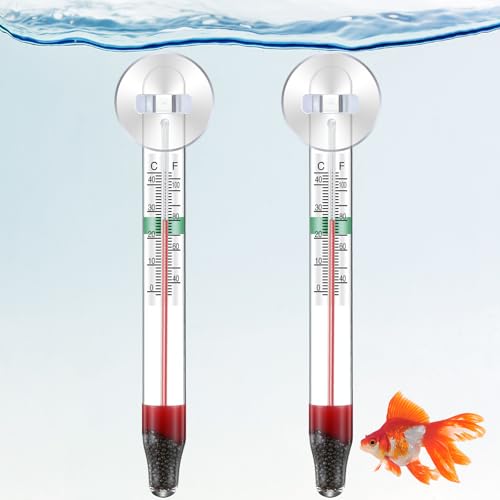
Glass Floating Thermometer, 2-Pack
cheap way to cross-check a digital reading
Check Price on Amazon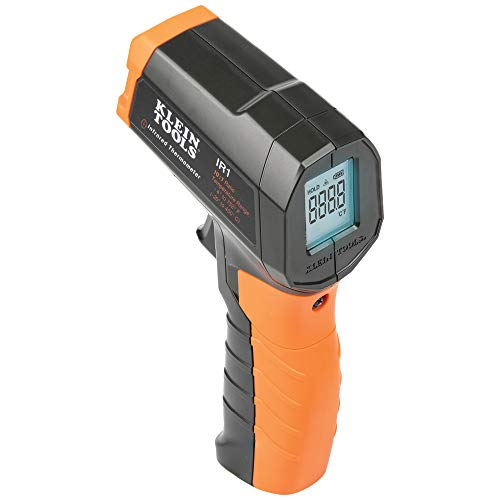
Infrared Non-Contact Thermometer Gun
spot-checks several tanks in seconds without touching the water
Check Price on Amazon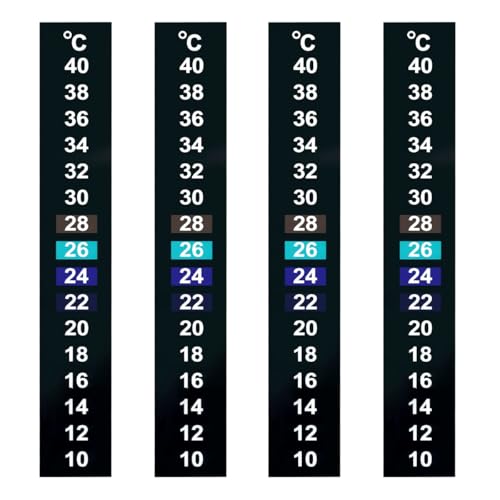
LCD Stick-On Thermometer Strip, 3-Pack
cheap and easy to read from across the room
Check Price on Amazon
Digital Thermometer with High/Low Memory
logs the highest and lowest reading automatically
Check Price on Amazon

